
Why Your China Trade Show Leads Never Turn Into Sales
You invested thousands in a trade show in China. The booth design looked professional. Your team had productive face-to-face interactions. Visitors seemed genuinely interested in your products.
Three days later, you flew home feeling optimistic. A week later, you sent follow-up emails. A month later, nothing had happened. No meetings. No RFQs. No distributor discussions.
If you've exhibited at Chinese trade fairs before, this scenario may sound familiar.
And if you're preparing for your first event in China, understanding why this happens could save you a significant amount of time, money, and frustration.
The uncomfortable truth is that many foreign companies arrive in China with a trade show strategy designed for Europe or North America. But China simply doesn't operate the same way.
Avoid the most common mistakes foreign exhibitors make before they even arrive at the event
If you're planning a trade show in China, download the free guide "Why Your Trade Show Playbook Breaks in China?"
The Trade Show Wasn't the Problem
When companies fail to generate results from Chinese exhibitions, they often blame the wrong things.
They assume:
The booth design wasn't attractive enough.
The visitors weren't qualified leads.
The market isn't interested.
The sales team didn't work hard enough.
In reality, many of these companies are speaking to the right potential clients. They're just using the wrong post-fair follow-up system.
A Chinese buyer may genuinely want to continue the conversation after the event. The challenge is that they often expect to do so differently than buyers in Western markets.
What Happens After a Trade Show in the West?
Most Western trade show strategies follow a familiar process. A visitor stops by your booth, exchanges contact details, and takes a brochure. Your sales team follows up by email, books a meeting, and the deal moves forward from there. The entire system depends on channels like:
Email
Company websites
LinkedIn
Google search
For many international exhibitors, this process feels completely normal. But that is exactly the assumption behind unsatisfactory results when entering China.
China Has a Different Digital Ecosystem
One of the biggest mistakes foreign companies make is thinking Chinese buyers behave like Western buyers. China developed its own digital ecosystem, with its own platforms, habits, and communication preferences.
Many of the channels that international marketers rely on every day play a much smaller role in the Chinese B2B buying process. Some surveys suggest only a third of Chinese B2B marketers consider email an important channel at all — a number that would alarm most Western marketing teams if it applied to their own market.
Instead, platforms like WeChat have become essential tools for business development and ongoing customer engagement in China.
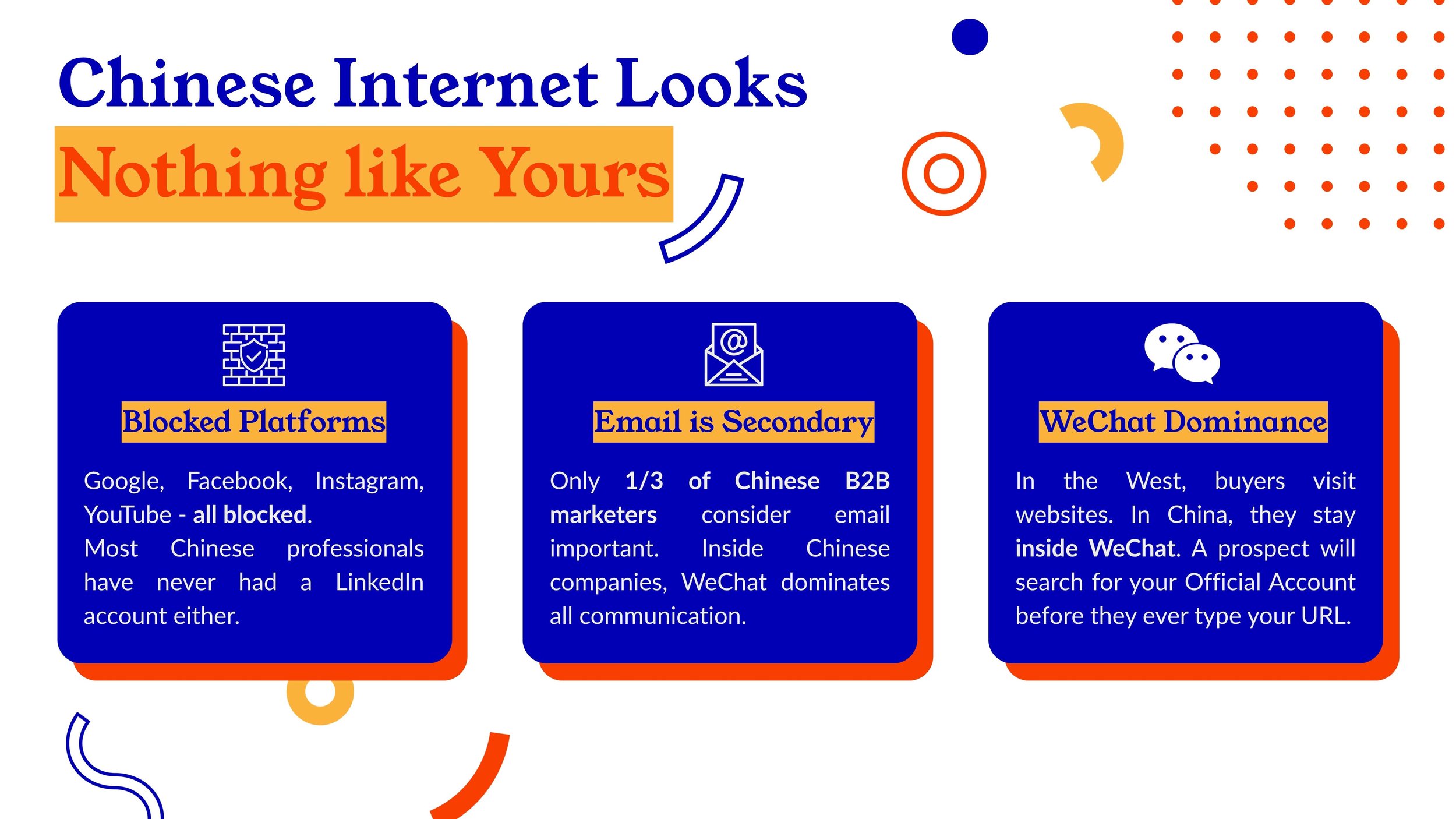
This is an excerpt from our free guide to preparing for trade shows in China for beginners
As a result, a visitor who seems highly interested during the exhibition may disappear simply because your company isn't available where they expect you to be. This creates a gap that many foreign exhibitors never realize exists.
The Hidden Cost of Friction
Imagine you're a buyer walking through a busy exhibition hall at the Canton Fair.
You've spoken with dozens of suppliers.
You return to your office after the event.
Now you need to decide which companies deserve a second conversation.
Will you spend ten minutes searching for each supplier online?
Will you visit multiple websites and fill out contact forms?
Or will you choose the companies that are easiest to reach?
Most buyers choose convenience.
Every additional step reduces the likelihood of follow-up.
The easier it is to reconnect with a supplier, the more likely the relationship continues. This principle applies in every market. But in China, the preferred path is often very different from what foreign exhibitors expect.
The Hidden Problem Behind Your Trade Show Results
This is where the real cost shows up, not on the show floor, but in the spreadsheet afterward when calculating trade show ROI.
A trade show isn't cheap. Flights, booth space, shipping, branded merchandise, printed materials, staff time. It adds up fast, often into the tens of thousands of dollars before a single lead is even spoken to.
If the post-fair marketing system fails for most of those conversations, the booth can do everything right, and the trip still won't pay for itself. And because the failure happens weeks later, in a follow-up sequence nobody is watching closely, it rarely gets traced back to its actual cause. It just gets filed away as "China didn't work for us."
Why Some Exhibitors Leave With Hundreds of Warm Contacts
Walk through any major Chinese trade fair, and you'll notice something interesting. Some booths seem to capture attention long after conversations end. Visitors don't just collect brochures. They stay connected. They continue receiving updates. They remain inside the company's ecosystem after the exhibition closes.
Meanwhile, other exhibitors start from zero after every event. They invest in another booth. Collect another pile of business cards. And repeat the same cycle. The difference isn't necessarily product quality. It's usually your follow-up infrastructure. The most successful exhibitors have already built systems that make ongoing communication easy and convenient for their potential clients.
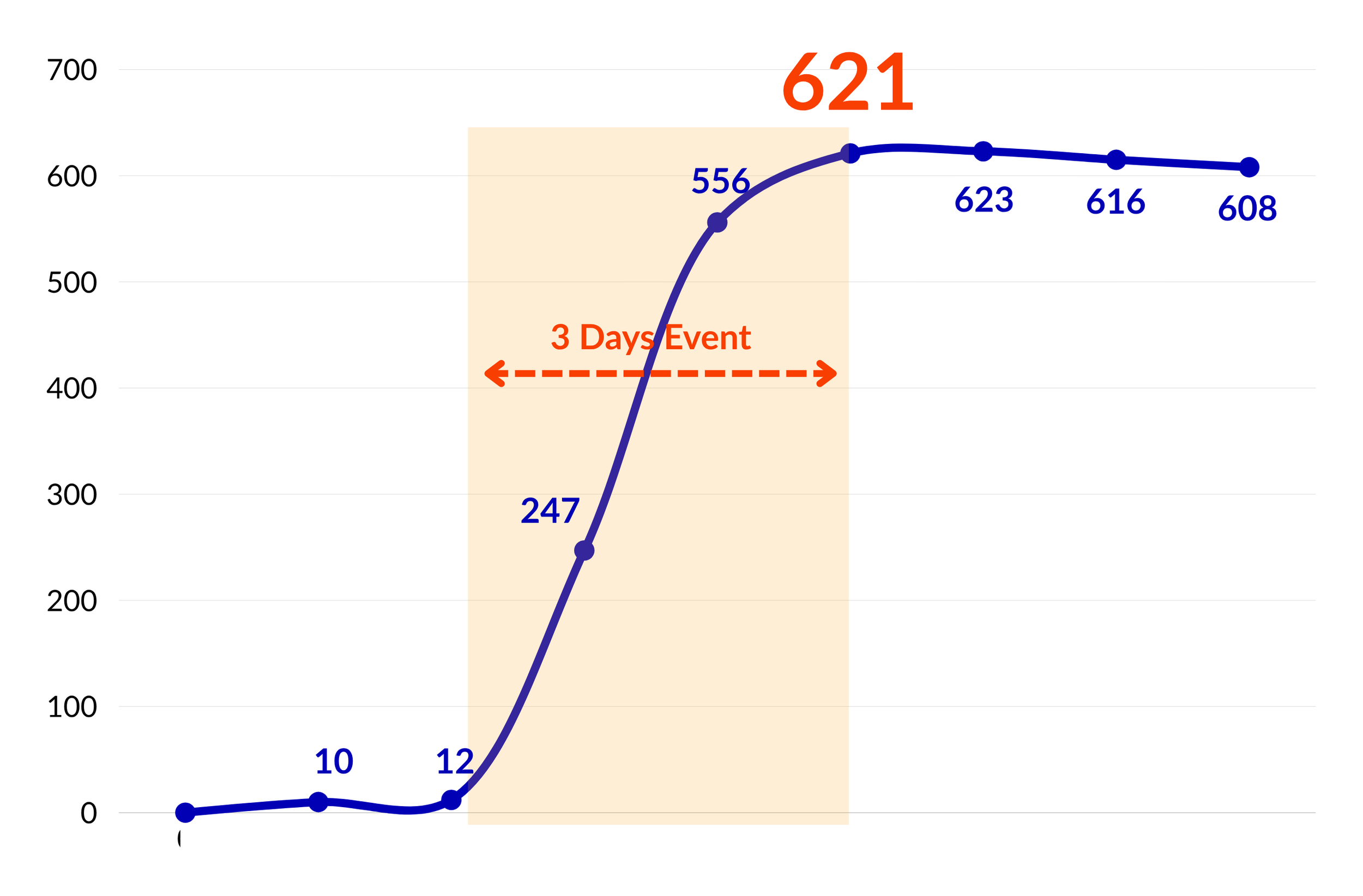
Case study: WeChat subscribers are a valuable audience you can retarget with articles, updates, and future campaigns to build long-term relationships
The Real Purpose of a Trade Show in China
Many companies view trade shows as lead-generation events, which is perfectly true. However, the most successful exhibitors view trade shows as the beginning of a relationship and an opportunity for business development.
The exhibition creates awareness and brand visibility. Not all buyers are ready to make a decision here and now, or even within a few weeks after the show. But you can stay in their orbit for months after the show. It’s the companies that continue the conversation that are usually the companies that win the business.
It requires a communication strategy that aligns with how Chinese buyers actually prefer to engage. Unfortunately, this is where many foreign companies discover that their usual marketing playbook no longer works.
Before You Exhibit in China, Ask Yourself These Questions
Before your next event, proper exhibition planning and market research are essential. Consider the following:
How will visitors stay connected with your company after the show?
What happens immediately after someone expresses interest?
Is your post-fair follow-up process designed for Chinese buyers or Western buyers?
Can prospects easily access your content after the event?
Are you reducing friction—or creating it?
Have you completed proper trade show selection based on your target market?
Many exhibitors never ask these questions, and that’s why they struggle to convert exhibition traffic into real business opportunities.
Don't Make the Same Mistake
Most trade show failures in China don't happen on the exhibition floor.
They happen even before the show when your follow-up system ignores Chinese specifics.
Understanding this difference before your next event could be the difference between returning home with a stack of forgotten business cards and building a pipeline of genuine opportunities.
Free Guide: Why Your Trade Show Playbook Breaks in China
If you're preparing for a trade show in China, we've created a free guide explaining:
Why traditional Western trade show tactics often fail
How Chinese B2B buyers behave differently
What foreign exhibitors frequently overlook
The key systems that should be in place before the event
A practical China Trade Show Readiness Checklist
Download the guide and avoid the mistakes that most foreign exhibitors only discover after the show is over.
